
Life Capital FAQ: 5-Hour Financial Literacy Sessions in Ottawa, Ages 14+
How long a session lasts, who it is for, how many sit at a table, what the Banker does, what a seat costs and how a date is set.
What is a Life Capital session?
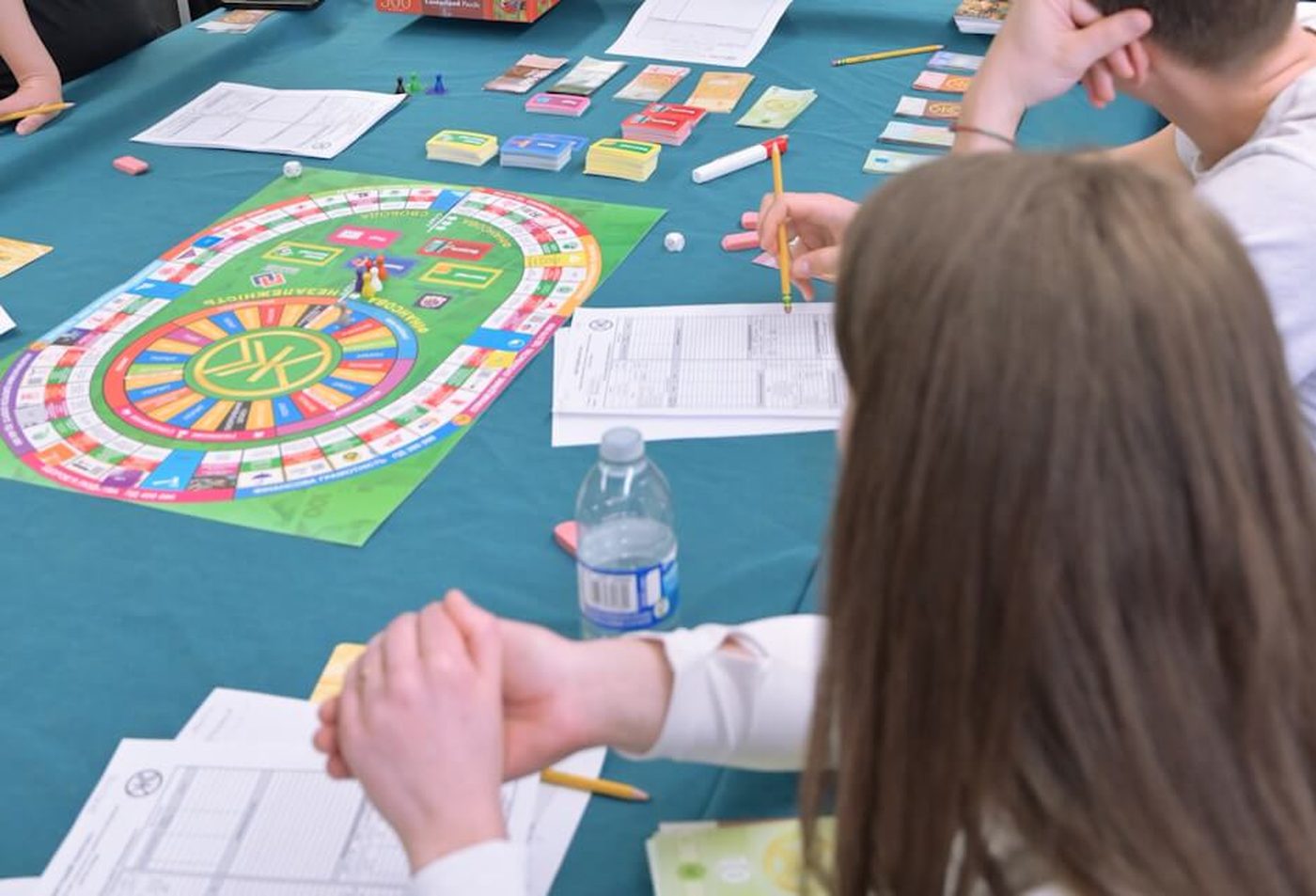
A Life Capital session is five hours at a real table: a board simulation of about forty years of life for five to eight players from 14, run in person by a Trainer with a Banker. From 1 November 2026 a seat in Ottawa costs CAD 200, CAD 150 each for a pair, CAD 1,000 a table. The reply to your enquiry sets the date.
The session: length, format, age and group size
What is Life Capital?
Life Capital («Життєвий капітал») is a board simulation of about forty years of life, played in person in one five-hour session by five to eight people from 14, with a Trainer and a Banker at the table. A team of authors created it in Kharkiv in 2017; in Canada it is run by LIFECAPITAL GLOBAL INC. from Carleton Place, Ontario.
How long is a Life Capital session?
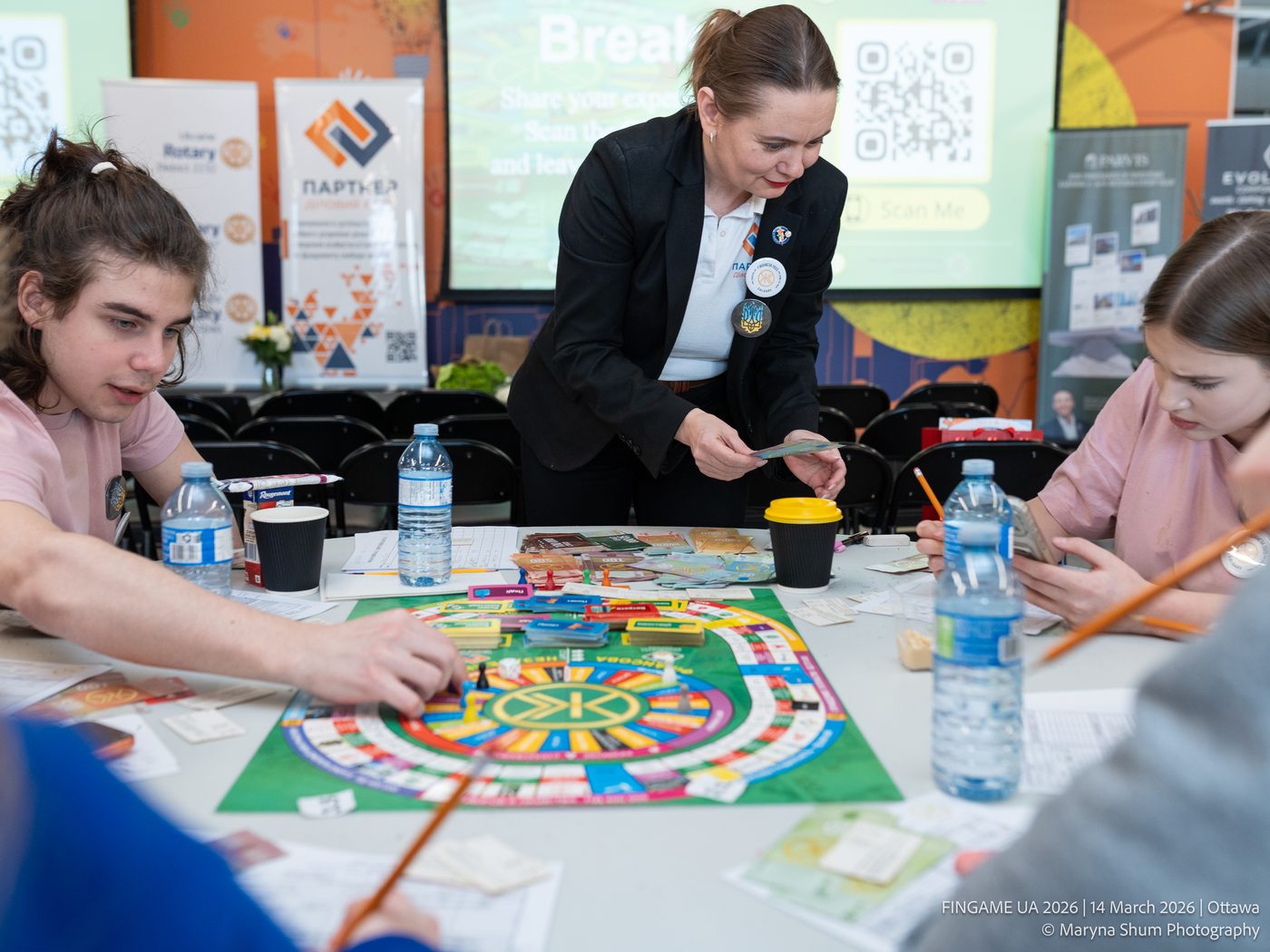
Five hours: a 30-minute briefing, a 2-hour first half, a break, a second half of 1 hour 45 minutes and a 30-minute debrief. Every session, for every audience, runs these five hours. Open sessions in Ottawa start at 13:00, usually at a weekend.
Is it in person or online?
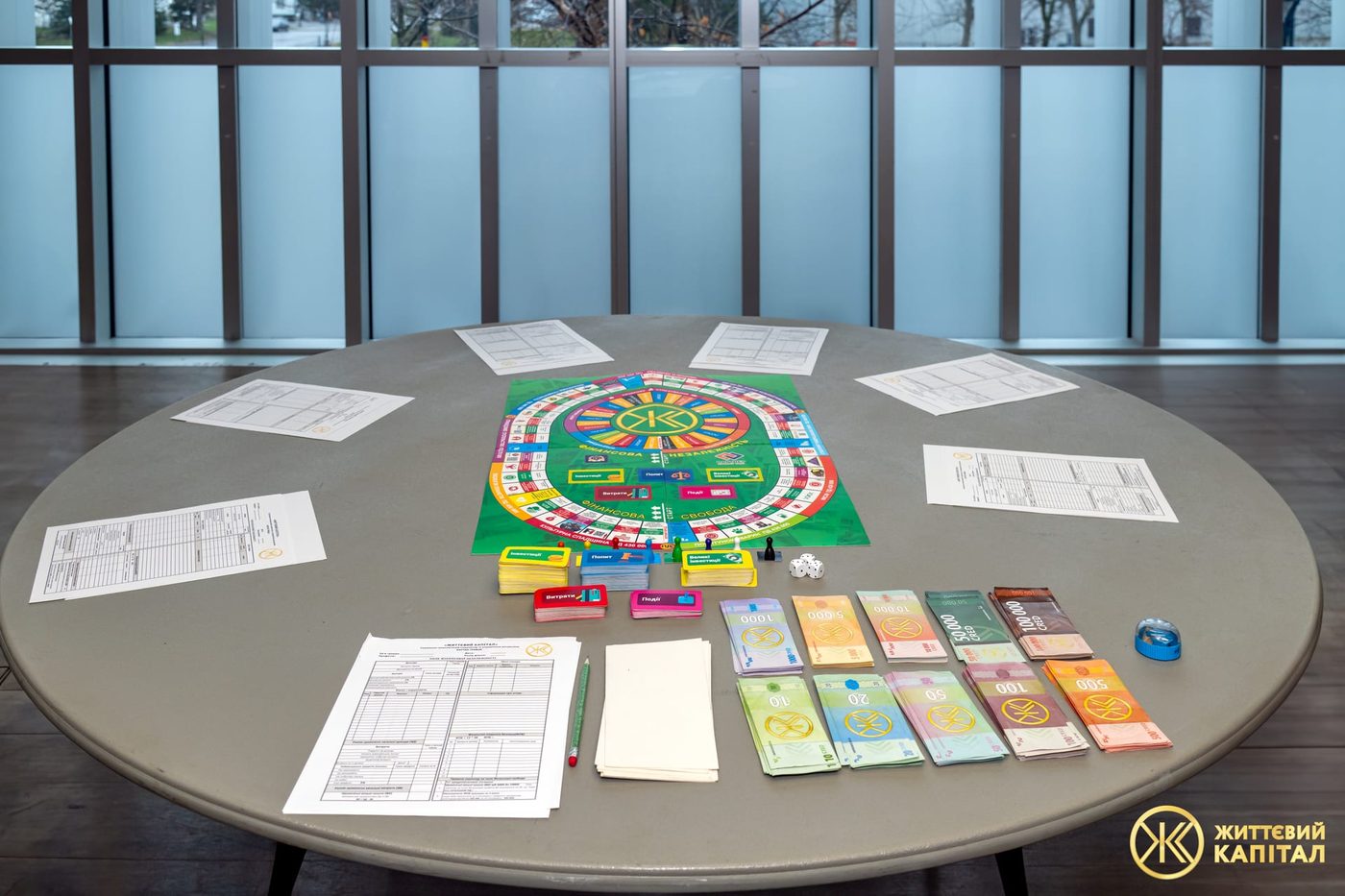
Sessions run in person only. The board, the cards and the play money are on a real table, and each player keeps a paper ledger. A school, a company or a group can book a session at its own venue in Ottawa or Eastern Ontario. To see how a turn works before you book, open the browser version of the simulation at lifecapital.evokira.com.
What age is Life Capital for?
From 14, for every program. Teens play at the same table as adults or in groups of their own; adult and corporate sessions are for adults.
Financial literacy for teens →
How many people play at once?
Five to eight at one table, eight at most. Larger groups play several tables at the same time, so groups go in multiples of eight: one table for eight people, two tables for sixteen.
Which languages are sessions in?
English and Ukrainian. Write the language you want in the enquiry, and the reply names a date when a Trainer can run the session in it.
Do I need to know anything about economics beforehand?
No. Everything a player needs is explained during the briefing and at the table.
At the table: the Trainer, the Banker and the ledger
What does the Banker do in Life Capital?
The Banker, who is the Trainer’s Assistant, pays out and collects the money at the table: wages, windfalls, purchases and payments. The Banker writes nothing down. Every player records their own moves in their own ledger. In a school club, students take turns as players, as the Banker and as assistant trainers.
What does the Trainer do?
A certified Trainer facilitates the whole session, from the briefing to the last minute of the debrief. The insight can come at any move, because it depends on the player and happens with the player, so every part of the five hours matters.
How is the game played, and how do you win?
Each player draws a Player Legend face down, a profession and a starting budget, and names a Dream. Moves land on sectors of the board: invest, sell, spend, give to charity, lose a job, take a wage or a windfall, have children, play the cards. The game ends at the notional age of 65; you win by entering the circle of financial freedom and acquiring your Dream.
The board game, move by move →
What do players take home?
Their own ledger, 3–5 personal goals for the month and a basic income–expenses–savings budget. The money at the table is play money, and the figures are for practice.
What a session costs
How much does a Life Capital session cost?
From 1 November 2026: CAD 200 a seat at an open session, CAD 150 each for two seats booked together, and CAD 1,000 for a whole table of up to eight players. School clubs, scenario-based corporate sessions and tournament stages are quoted for the case, in writing.
Is the price per person or per table?
Per seat, except the whole-table rate. A table seats five to eight participants, eight at most, and each seat is booked on its own; a family, a team or a class group can take the whole table.
What is included in a quote?
The Trainer’s time, the kits at the tables and the materials the session needs. Lead time, cancellation terms and travel for the Trainer are set out in the written offer.
Can someone else pay for a group of teenagers?
Yes. For Vienna 2024, Rotarians from several countries paid for the teenagers to travel and stay.
Is Life Capital financial or investment advice?
No. LIFECAPITAL GLOBAL INC. runs an educational simulation: open sessions, a school club, corporate sessions, the Trainer School and tournaments. The money at the table is play money, and the figures on this site are examples for practice.
Figures in Canadian dollars. The written offer carries the final number, the lead time and the cancellation terms. Ask for a session date →
Booking: how a date is set
How is a session date set?
Dates are set in the reply to your enquiry, against the rooms and Trainers free that month, and a date is held once the reply names it. Write the city, the month, the hours that suit you and how many people will take part.
How do I book a seat?
Send the form on the contacts page or call +1 613 621 1261. A person reads the enquiry and replies from info@lifecapital.ca within two business days with the formats that fit, the dates we can hold and the price for your case.
Can a parent and a teenager play together?
Yes. Adults play at the same tables as teens. Two seats booked together cost CAD 150 each from 1 November 2026, and a family or a group of friends can take a whole table of up to eight for CAD 1,000.
Schools, companies and future Trainers
Can a school run Life Capital?
Yes, as a school club across the school year: shorter theory meetings, and full five-hour simulations where the theory is practised. Students play in multiples of eight, each keeps a paper ledger, and the price is quoted per school.
Can a company book a team session?
Yes. A five-hour team session for 6–18 participants runs at your premises; you provide a suitable room and a coffee break at half-time. It closes with a retrospective: agreed decision principles, a roles map and 5–7 concrete process improvements. The price depends on your task.
How do I become a Life Capital Trainer?
Play one full five-hour session first; only players can train as Trainers. Then take the Trainer School: a 7-hour starting training, weekly practice and supervised sessions at a real table. The certificate stages are optional.
Who is behind Life Capital
Who founded Life Capital in Canada?
Olga Ialovenko (Ольга Яловенко, also spelled Olha Ialovenko), a Carleton Place resident who wrote the English-language version of the simulation and founded LIFECAPITAL GLOBAL INC., incorporated in Ontario on 24 June 2026.
Who owns the Life Capital methodology?
The NGO «Діловий клуб „Партнер“» (Business Club Partner, ЄДРПОУ 42145229, Kharkiv), which runs the Ukrainian school clubs and the national tournament in Ukraine. LIFECAPITAL GLOBAL INC. is the Canadian operator; the two are separate legal persons.
Is Life Capital a charity?
LIFECAPITAL GLOBAL INC. is an Ontario share-capital corporation. It holds no charitable registration in Canada and issues no donation receipts.
Where has Life Capital been written about?
Fourteen outside pages from 2021 to 2026: three myFM local newsrooms in Ontario, Ukraine’s public broadcaster and regional press, and three Ukrainian universities, one in a peer-reviewed journal. Each is listed with its date and link on the press page.
No reply after two business days means the message did not reach us. Write to info@lifecapital.ca or call +1 613 621 1261.